
News
Kevin Warsh and the New Era of the Fed: How Will Monetary Policy Reshape Global Prices and Precious Metals?
May
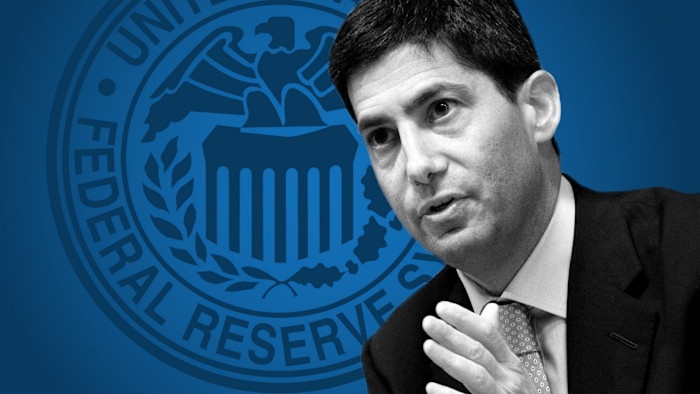
The official appointment of Kevin Warsh as the new Chair of the Federal Reserve has opened one of the most closely watched periods in the global economy in recent years. After the era of Jerome Powell, who became associated with the most aggressive anti-inflation campaign since the early 1980s, international financial markets are now trying to decipher the direction the Fed will take under Warsh and how it may impact the US dollar, interest rates, commodities, and especially the precious metals market.
Warsh’s arrival is not merely a change in leadership. It comes at a highly sensitive moment for the global economy. The United States is still facing persistent inflationary pressure, geopolitical tensions in the Middle East continue to disrupt energy markets, and the global trade system is being reshaped by new tariff policies from Washington. Economies from Europe to Asia are struggling to balance slowing growth with the risk of renewed inflation.
What has drawn particular attention from investors is that Warsh was once considered an inflation hawk, yet during his nomination and confirmation process, he appeared to signal a more flexible approach toward interest rates. This has created a major question for global markets: will the Fed under Warsh continue maintaining high interest rates to suppress inflation, or will it shift toward supporting economic growth amid increasing political pressure from the White House?
For years, global financial markets have revolved around every signal coming from the Federal Reserve. When the Fed raises interest rates, global capital tends to flow into the United States, strengthening the dollar and pressuring commodity prices. When the Fed loosens policy, liquidity often moves back into equities, gold, and risk assets. As a result, any shift in the Fed’s policy mindset can create ripple effects across the entire international financial system.
Analysts argue that Warsh is taking office under far more complicated conditions than Powell faced at the start of his tenure. When Powell became Fed Chair in 2018, inflation was relatively low and the global economy remained stable. Today, however, the Fed must simultaneously deal with three major pressures: inflation has not fully disappeared, US public debt has surged, and confidence in the Fed’s independence is increasingly being questioned.
One of the most important policy signals associated with Warsh is his view on the Fed’s balance sheet. Following the pandemic, the Federal Reserve expanded its balance sheet by trillions of dollars through massive bond-buying programs. Warsh is believed to favor reducing the Fed’s deep intervention in financial markets and gradually shrinking the central bank’s asset holdings.
If pursued aggressively, this could significantly impact global bond markets. US Treasury yields may remain elevated for longer, increasing borrowing costs worldwide. For emerging economies, this poses a serious challenge because a stronger dollar often creates pressure on exchange rates, foreign debt obligations, and capital flows.
However, the greatest uncertainty surrounding Warsh is the political pressure he faces from the US administration to support economic growth. President Donald Trump has repeatedly urged the Fed to cut interest rates in order to stimulate the economy and support stock markets. The decision to hold Warsh’s swearing-in ceremony at the White House instead of the Federal Reserve has intensified debate over the central bank’s independence.
Many economists worry that if the Fed is perceived as politically influenced, market confidence in the US dollar and Treasury bonds could weaken over the long term. This issue is especially important for gold and precious metals because history has shown that whenever confidence in US monetary policy declines, investors tend to seek safety in gold.
Financial experts are currently divided into two major camps regarding the future of Fed policy under Warsh.
The first group believes that Warsh will continue prioritizing inflation control. According to this view, the Fed understands that easing policy too early could trigger another inflationary wave, especially as oil prices and import costs continue to rise. If this scenario unfolds, US interest rates may remain high for much longer than markets currently expect.
Under such conditions, gold could face short-term correction pressure because higher bond yields generally reduce the attractiveness of non-yielding assets like gold. A stronger US dollar would also make gold more expensive for international investors.
The second group of analysts, however, believes that Warsh may prove more flexible than Powell. They argue that the Fed no longer has enough room to continue aggressive tightening because signs of economic slowdown are beginning to emerge across multiple sectors of the US economy. If the Fed eventually shifts toward rate cuts or adopts a more dovish tone, gold and silver could enter a new bullish cycle.
Notably, many international financial institutions no longer view gold solely as a traditional safe-haven asset. Instead, it is increasingly seen as a hedge against geopolitical instability and currency devaluation. Over the past several years, central banks around the world have purchased gold at the fastest pace seen in decades. Analysts believe this trend is unlikely to stop during the Warsh era.
Several Wall Street strategists argue that the gold market is no longer driven exclusively by interest rates. Geopolitical tensions, strategic competition between the United States and China, energy security concerns, and the global trend toward de-dollarization are becoming equally influential factors.
This is why many institutions continue maintaining highly bullish forecasts for gold prices even though the Fed has not yet entered a major rate-cutting cycle. Some analysts even suggest that if the Fed loses control over inflation or is eventually forced to resume large-scale monetary easing, gold could enter another historic supercycle.
Silver faces an even more complex situation because it functions both as a precious metal and an industrial commodity. If Warsh moves toward lower interest rates to support growth, industrial demand could rebound strongly, boosting silver consumption in sectors such as solar energy, electronics, and electric vehicles.
Meanwhile, platinum and palladium are also being closely monitored because the global automotive market could experience significant volatility depending on US monetary policy. Prolonged high interest rates would weaken consumer demand and directly affect automobile production and the demand for industrial precious metals.
Another issue closely watched by investors is the relationship between the Fed under Warsh and the oil market. Recent geopolitical conflicts have caused sharp swings in energy prices, increasing inflationary pressure worldwide. If oil prices remain elevated, the Federal Reserve may face a difficult dilemma: raise rates further to fight inflation or preserve economic stability.
Many analysts believe this will become Warsh’s greatest challenge during his first year as Fed Chair. If the central bank reacts too aggressively, recession risks could rise sharply. If it reacts too weakly, inflation may accelerate once again.
As a result, gold markets are now responding not only to interest rate decisions but also to every Fed statement concerning economic outlooks and geopolitical developments.
Another important trend is the changing behavior of central banks worldwide. In recent years, many countries have reduced their reliance on US dollar reserves while increasing their gold holdings. This reflects a broader strategic shift within the global financial system.
If the Fed under Warsh continues facing controversy regarding independence or adopts policies perceived as overly supportive of growth at the expense of monetary discipline, central bank gold accumulation may intensify further.
Analysts at major investment funds argue that the world is entering a period in which gold is no longer merely an inflation hedge but also a protection against systemic financial risk. This long-term perspective continues to support demand for gold despite occasional short-term corrections.
Global stock markets are also expected to be heavily influenced by the direction of the new Fed. If Warsh adopts a more accommodative stance, capital could return aggressively to risk assets. However, if the Fed maintains a hawkish position, financial markets may continue experiencing sharp volatility throughout the second half of the year.
Emerging economies such as Vietnam will also feel the impact. A stronger US dollar often puts pressure on exchange rates and import costs, meaning domestic gold prices could remain highly volatile alongside international movements.
In addition, industrial metals such as copper, aluminum, and nickel are heavily dependent on the economic outlook of both the United States and China. If the Fed keeps rates elevated for too long, global industrial demand could weaken and pressure base metal prices lower. Conversely, if monetary policy becomes more supportive, metals linked to the global energy transition may benefit significantly.
Many analysts believe Warsh could usher in an era of what they describe as a “pragmatic Fed,” in which policymakers become more flexible instead of adhering rigidly to a fixed monetary framework. This would make markets far more sensitive to economic data and Fed communication.
For gold, periods of uncertainty and volatility are often the most powerful catalysts. Even if interest rates do not fall dramatically, any erosion in confidence regarding the Fed’s ability to manage inflation or any escalation in geopolitical tensions could still drive gold prices sharply higher.
A growing number of investment institutions now believe that the high levels reached by gold in recent years may not represent the final peak. They argue that the world is entering a deep phase of geopolitical and financial restructuring in which the role of gold will be fundamentally redefined.
The Federal Reserve under Kevin Warsh is therefore not merely an American story. It could become a defining chapter for global capital flows, the international financial order, and commodity market trends for years to come.
What markets are truly waiting to see now is not simply whether the Fed will raise or cut interest rates, but what kind of Federal Reserve Warsh intends to build: one that remains firmly committed to fighting inflation at all costs, or one that becomes more flexible in supporting growth and adapting to a rapidly changing world.
Whichever path emerges, one thing appears increasingly certain: under the new Fed Chair, volatility across financial markets and precious metals is likely to remain extremely high, and gold will probably continue standing at the center of global debates over money, trust, and systemic risk.

Bài Viết Liên Quan
EU Circular Economy Regulations Introduce New Requirements for Vietnamese Textile and Garment Businesses
Vietnam’s Textile and Garment Industry Faces the Challenge of Traceability and Supply Chain Circularity
Australia Reviews Anti-Dumping Measures on Galvanized Steel: A Sign of Rising Trade Protection?
Middle East Conflict Boosts China’s Green Industry: Global Expert Perspectives
Industrial Metals Market Volatility: Aluminum, Copper, and Steel Prices Shaped by Geopolitics and Global Demand
Establishing Vietnam’s Carbon Market: A Strategic Step Toward a Green Economy and Global Integration
Bài Viết Cùng thể loại
Middle East Conflict Boosts China’s Green Industry: Global Expert Perspectives
Industrial Metals Market Volatility: Aluminum, Copper, and Steel Prices Shaped by Geopolitics and Global Demand
Establishing Vietnam’s Carbon Market: A Strategic Step Toward a Green Economy and Global Integration
Automakers Compete for Aluminum Supply Amid Rising Tensions in the Gulf Region: Global Supply Chains Under Pressure
A New Milestone for Vietnam’s Agriculture: Piloting Pork Trading on the Commodity Exchange
Gold Prices Fall Amid Middle East Tensions: Economic Weakness in the U.S. and the Warning of Returning Inflation