
Agricultural, News
A New Milestone for Vietnam’s Agriculture: Piloting Pork Trading on the Commodity Exchange
Mar
On March 25, 2026, in Ho Chi Minh City, a pilot proposal with significant strategic implications was introduced: the listing and trading of pork on the Mercantile Exchange of Vietnam. This initiative is not merely a technical adjustment to improve the pork market, but a meaningful step toward modernizing Vietnam’s agricultural sector in a direction that emphasizes transparency, standardization, and global integration.
For many years, Vietnam’s pork market has faced persistent structural challenges. Pricing has often lacked transparency, heavily influenced by intermediaries and fragmented distribution layers. Farmers have typically found themselves in a passive position, while consumers struggle to verify product quality and origin. These inefficiencies have prevented the supply chain, despite its large scale, from operating under a clear and reliable pricing mechanism.
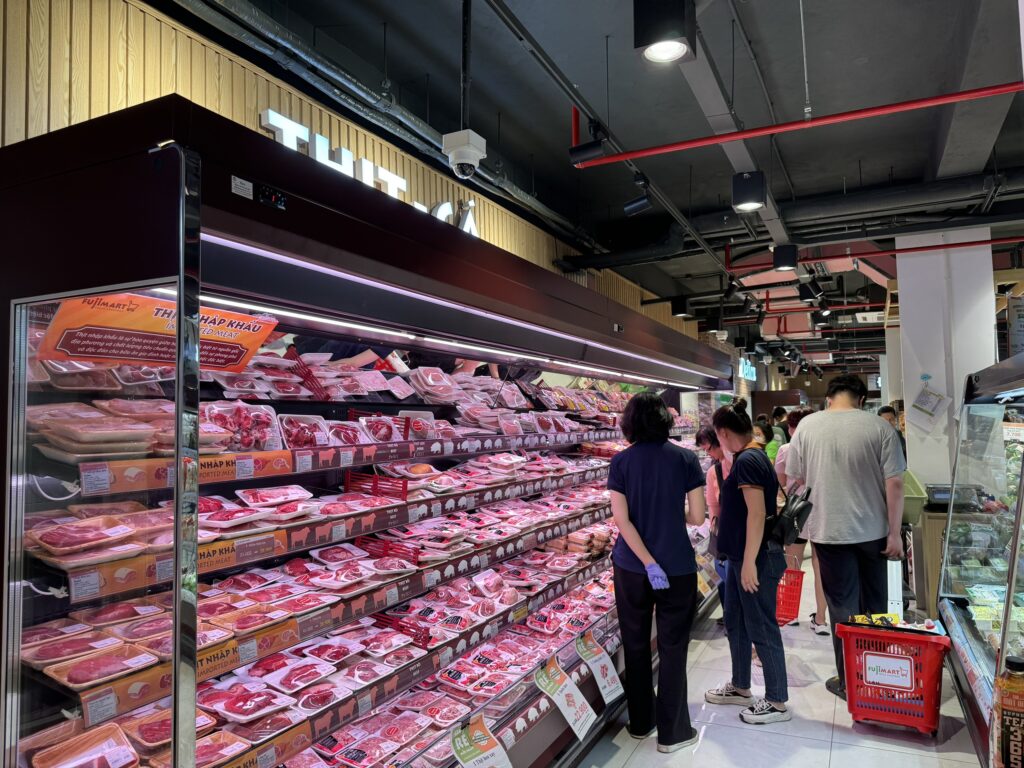
The pilot proposal introduces a fundamentally new approach. Instead of trading live pigs, the exchange will focus on pork carcasses after slaughter, which must meet strict standards on quality, food safety, and traceability. This reflects a shift toward product standardization, aligning Vietnam’s agricultural practices with international commodity markets where goods such as wheat, beef, and coffee are traded under clearly defined specifications.
Importantly, the trading model is designed on a voluntary basis and will operate alongside traditional methods. This cautious and flexible approach allows businesses, traders, and farmers to gradually adapt without disrupting the existing supply chain. It mirrors international experiences, where commodity exchanges are typically developed step by step rather than imposed abruptly.
Ho Chi Minh City, the largest pork consumption market in the country, was selected as the pilot location for good reason. With a daily consumption of approximately 13,000 to 14,000 pigs—equivalent to an annual market value exceeding VND 25 trillion—it provides sufficient scale and liquidity. At the same time, the city integrates all key components of the value chain, from farming and slaughtering to distribution and retail, creating the necessary conditions for a functional exchange model.
During the meeting, many stakeholders across the pork value chain expressed strong interest and readiness to participate. This response highlights a genuine demand for a more transparent trading mechanism. Beyond simple transactions, participants also emphasized the need for synchronized traceability systems to ensure product integrity when listed on the exchange. Trust in product quality remains a cornerstone of any modern market.
Speaking at the event, Tran Huu Linh stressed the importance of restructuring the pork market toward openness and transparency. He noted that price listings and product information must be fully disclosed and closely linked to traceability systems. This would not only improve transaction quality and food safety but also contribute to establishing a reliable market benchmark price.
Viewed from a broader perspective, this model extends beyond the pork industry. It opens a new pathway for Vietnam’s entire agricultural sector. When agricultural products are standardized and traded on exchanges, they can achieve transparent pricing, reduce the risk of manipulation, and improve access to international markets.
Globally, many developed countries have successfully built commodity exchanges as a key pillar of their modern financial systems. In the United States, agricultural exchanges serve not only as trading platforms but also as tools for price risk management. In Europe and Japan, similar systems play a vital role in stabilizing markets and enhancing the value of agricultural products.
Vietnam’s pilot pork trading initiative can therefore be seen as an early step toward that direction. It is not just about a single commodity, but a practical experiment for building a modern agricultural financial ecosystem. Lessons learned from this model could be extended to other key export sectors such as coffee, rice, rubber, and seafood.
Another critical aspect is the role of the exchange in forming reference prices. With transparent and competitive trading, prices can better reflect real supply and demand conditions. This helps reduce price manipulation and protects farmers, who are often the most vulnerable participants in the value chain.
However, the success of this model will depend not only on infrastructure but also on a shift in mindset. Farmers need guidance to understand and participate in the new system. Businesses must comply with stricter standards on quality and transparency. Regulators must establish a clear and consistent legal framework. This transformation will take time, but it is an essential path if Vietnam aims to elevate its agricultural sector.
In the long term, the pilot program is more than a market reform—it is a preparation for a larger future. As agricultural products become financialized, they can integrate into investment systems, attract capital flows, and generate new layers of value.
Overall, this initiative represents a cautious yet forward-looking step. It signals Vietnam’s gradual alignment with modern commodity market standards, where transparency, standardization, and technology play central roles. If implemented effectively, the model will not only stabilize the pork market but also lay the foundation for a more advanced agricultural financial ecosystem, bringing Vietnam closer to the practices of developed economies.

Bài Viết Liên Quan
Kevin Warsh and the New Era of the Fed: How Will Monetary Policy Reshape Global Prices and Precious Metals?
Australia Reviews Anti-Dumping Measures on Galvanized Steel: A Sign of Rising Trade Protection?
Middle East Conflict Boosts China’s Green Industry: Global Expert Perspectives
Industrial Metals Market Volatility: Aluminum, Copper, and Steel Prices Shaped by Geopolitics and Global Demand
Establishing Vietnam’s Carbon Market: A Strategic Step Toward a Green Economy and Global Integration
Global Steel Output Declines in February 2026: A Temporary Adjustment or the Start of a New Cycle?
Bài Viết Cùng thể loại
Kevin Warsh and the New Era of the Fed: How Will Monetary Policy Reshape Global Prices and Precious Metals?
Middle East Conflict Boosts China’s Green Industry: Global Expert Perspectives
Industrial Metals Market Volatility: Aluminum, Copper, and Steel Prices Shaped by Geopolitics and Global Demand
Establishing Vietnam’s Carbon Market: A Strategic Step Toward a Green Economy and Global Integration
Automakers Compete for Aluminum Supply Amid Rising Tensions in the Gulf Region: Global Supply Chains Under Pressure
Gold Prices Fall Amid Middle East Tensions: Economic Weakness in the U.S. and the Warning of Returning Inflation