
Metal, News
Gold and Silver Prices Surge Amid Inflation, Geopolitical Risk, and Global Monetary Policy Shifts
Jan
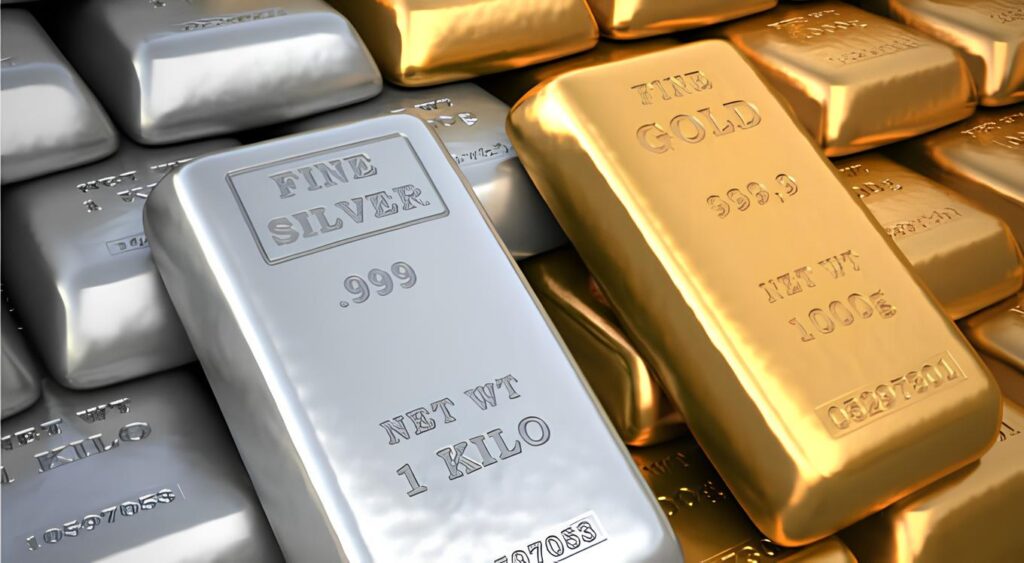
Precious metal prices, particularly gold and silver, are experiencing one of the strongest and most volatile rallies in modern history as instability in the Middle East, safe haven demand, US Federal Reserve policy, and a weakening US dollar combine to create powerful upward momentum. Gold has repeatedly set new all time highs on the international market and is approaching the 6000 US dollar per ounce threshold according to forecasts from several major financial institutions, while silver has surpassed 100 US dollars per ounce and is increasingly being discussed as a candidate for a move toward 200 US dollars if current conditions persist.
These developments are not merely technical price movements but rather a broad response from global investors to rising financial and geopolitical risks. This article provides an in depth analysis of the forces driving the sharp rise in gold and silver, along with short term price outlooks based on the views of leading analysts and financial experts.
Geopolitical tensions play a central role
In recent weeks instability in the Middle East has intensified, with complex political developments, rising confrontations between regional and global powers, and increasing risk of broader military escalation. These conditions are contributing to a prolonged environment of uncertainty on the global security map, raising concerns about worldwide economic growth, supply chain disruptions, and rising resource costs. In such an environment gold and silver are widely viewed as safer stores of value compared with riskier assets such as equities or corporate bonds, leading to a strong flow of capital into precious metals.
Beyond the Middle East, broader political risks such as escalating trade tensions, tariff disputes, and unpredictable foreign policy shifts in major economies are further strengthening the appeal of gold relative to traditional financial assets. When geopolitical risks increase, investors tend to move more capital into gold and silver as a way to preserve wealth. This pattern has been clearly visible in derivatives markets and exchange traded funds focused on precious metals.
A weaker US dollar and its impact on precious metals
Another key macroeconomic factor supporting gold and silver is the weakening of the US dollar. Precious metals are priced globally in US dollars. When the dollar loses value against other currencies, gold becomes cheaper in local currency terms for buyers outside the United States. This stimulates additional international demand and adds upward pressure to prices.
The current softness in the dollar is supported by market expectations that the Federal Reserve will keep interest rates unchanged in the near term and could even move toward rate cuts later in the year. When real interest rates fall, the opportunity cost of holding non yielding assets such as gold and silver declines, making them more attractive to investors. At the same time, a weaker dollar enhances gold’s competitiveness relative to cash and dollar denominated fixed income instruments.
Federal Reserve policy and market psychology
US Federal Reserve policy remains a central driver of global financial markets because it influences not only domestic interest rates but also international capital flows. At present, with the US economy facing mixed signals, the Fed has chosen to keep its benchmark interest rate steady in recent meetings. This has lowered expectations for further tightening and created a more supportive financial environment for non monetary assets like gold and silver.
When rates stop rising, government bonds and other fixed income instruments become less attractive if their yields do not sufficiently compensate for inflation and uncertainty. As a result, many investors reallocate capital toward safe haven assets such as gold, silver, and related exchange traded funds. Lower rates can also weaken the US dollar, providing an additional tailwind for precious metals.
Markets tend to move in anticipation rather than in reaction. Even without an immediate rate cut, expectations that easing could occur later are already enough to drive capital flows into gold and silver. This is especially evident in periods of rising speculative activity and heightened demand for portfolio protection.
Market response as capital flows into safe haven assets
Against a backdrop of growing global political and economic risks, the shift toward safe haven assets has created significant volatility in precious metals markets. Gold has climbed above 5000 US dollars per ounce, marking a historic milestone as global investors seek to shield portfolios from inflation and geopolitical instability.
Silver has also delivered an impressive performance, moving above 100 US dollars per ounce and significantly outperforming its previous historical ranges. Investor appetite for diversification into less traditional precious metals has contributed to this momentum. Some market analysts suggest that if safe haven demand and speculative interest remain strong, silver could extend its rally toward 200 US dollars per ounce, especially given tight supply and rising investment demand.
Part of this demand also comes from central banks seeking to diversify foreign exchange reserves and reduce exposure to traditional financial assets. Large scale central bank purchases of gold add sustained buying pressure to the market and help reinforce the upward price trend.
Short term outlook for gold and silver prices
Major financial institutions and market experts have released a range of projections for gold and silver in 2026. One of the most widely discussed forecasts suggests that gold could surpass 6000 US dollars per ounce this year, driven by a weaker dollar, persistent safe haven demand, and supportive monetary policy conditions. Some analysts emphasize that geopolitical tensions and capital flows into protective assets will remain key pillars of this outlook.
Other major banks have also raised their gold price forecasts for late 2026, citing continued private investment demand and strong buying from emerging markets. Ongoing accumulation by central banks is seen as an additional factor reinforcing the bullish trend.
For silver, many experts believe the metal could outperform gold in percentage terms because it serves both as a safe haven asset and as an industrial input. If strong investment demand continues alongside supply constraints, silver could move closer to the 200 US dollar per ounce level in the short term.
Risks of corrections and profit taking
Despite the strong bullish outlook, the precious metals market still faces the risk of sharp corrections and waves of profit taking. Gold has risen very rapidly in a short period, prompting some investors to consider locking in gains when key technical levels are reached. Excessively optimistic expectations can also lead to abrupt pullbacks if economic data surprises to the upside or if the Federal Reserve signals a more restrictive stance before eventually cutting rates.
Speculative capital can reverse quickly if the US dollar stages a strong recovery or if geopolitical tensions ease through diplomatic breakthroughs. In such scenarios, riskier assets like equities could regain appeal and draw capital away from precious metals, creating significant downward pressure.
Instability supports gold and silver.
Gold and silver prices today reflect the combined impact of prolonged macroeconomic and geopolitical forces. Instability in the Middle East, expectations surrounding Federal Reserve policy, and a weaker US dollar are the strongest drivers pushing safe haven assets to the forefront of investor demand. Gold has already moved beyond previous records above 5000 US dollars per ounce and, according to several forecasts, may continue toward higher long term targets, potentially reaching 6000 US dollars per ounce. Silver has also posted powerful gains and could approach 200 US dollars per ounce if the current momentum persists.
However, investors should remain cautious about potential corrections and profit taking episodes, while closely monitoring financial market signals and global monetary policy developments. In a world where economic and political conditions remain highly uncertain, continuously reassessing both fundamental and technical factors is essential for capturing opportunities and managing risk effectively.

Bài Viết Liên Quan
Kevin Warsh and the New Era of the Fed: How Will Monetary Policy Reshape Global Prices and Precious Metals?
Global Steel Industry Reshaping: Short-Term Decline, Deepening Divergence, and the Rise of New Growth Centers
Australia Reviews Anti-Dumping Measures on Galvanized Steel: A Sign of Rising Trade Protection?
Middle East Conflict Boosts China’s Green Industry: Global Expert Perspectives
Gold After the $5,500 Peak: Why Markets Are Warning of a Possible Correction to $3,800
Gold Price Outlook: When Global Instability Becomes the Catalyst, the $10,000 Mark Is No Longer Far-Fetched
Bài Viết Cùng thể loại
Kevin Warsh and the New Era of the Fed: How Will Monetary Policy Reshape Global Prices and Precious Metals?
Gold After the $5,500 Peak: Why Markets Are Warning of a Possible Correction to $3,800
Gold Price Outlook: When Global Instability Becomes the Catalyst, the $10,000 Mark Is No Longer Far-Fetched
Gold Prices Rebound, Oil Declines and USD Fluctuates: Signals from Easing Iran Tensions at the Strait of Hormuz
Gold Prices Fall Amid Middle East Tensions: Economic Weakness in the U.S. and the Warning of Returning Inflation
World gold prices surpass the 5,000 mark for the third time, yet gold remains an enigma in 2026