
News
Impulsive or Strategic? How Donald Trump Uses the U.S. Dollar, Oil, and Trade to Reshape the Global Economic Order
Jan
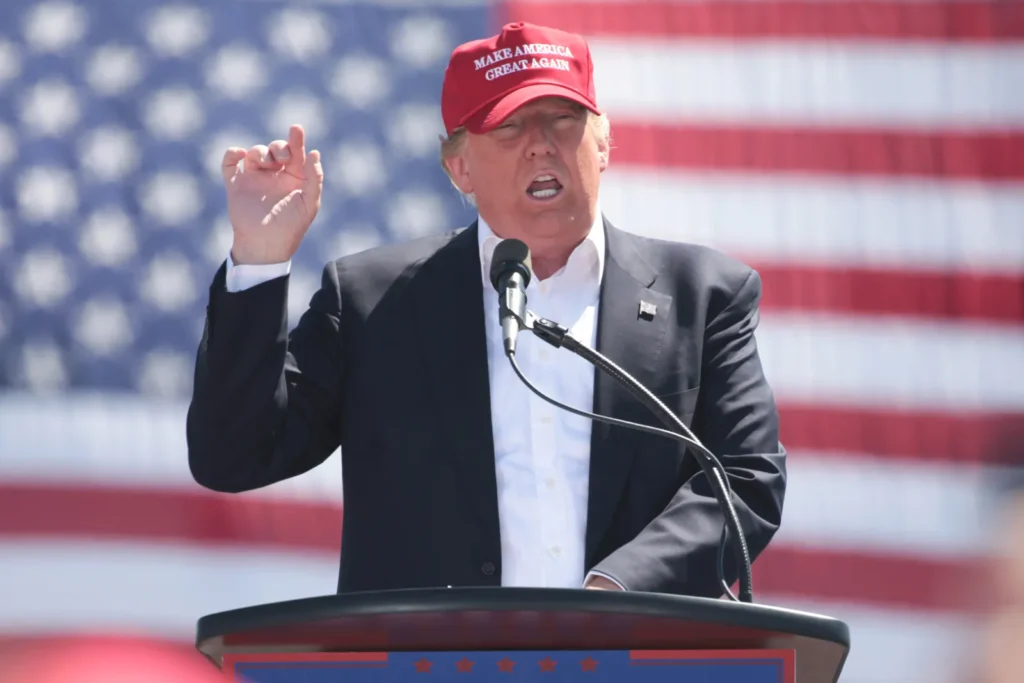
Throughout his political career, Donald Trump has repeatedly been labeled “unpredictable.” Short statements, overnight policy reversals, and shock decisions toward both allies and markets have shaped the image of a president driven by impulse and emotion. Yet, when his policies are examined through the lens of “Make America Great Again” (MAGA), a far more coherent logic emerges. Trump deliberately turns uncertainty into a governing tool, transforming unpredictability into strategic leverage to reset the global balance of economic power.
Three pillars sit at the center of this approach: the U.S. dollar, oil, and trade policy. These forces do not operate independently. They interact, reinforce one another, and ripple outward, reshaping industrial commodity markets, global supply chains, and inflation dynamics. What stands out is how outcomes often defy conventional economic expectations. The dollar weakens even as the United States remains the core of global finance. Oil prices are restrained despite heightened geopolitical tension. Inflation, widely expected to surge under tariffs, instead shows signs of easing over the medium term.
A Weaker Dollar and the Power of Uncertainty
For decades, the U.S. dollar has functioned as the anchor of the global financial system. Its stability allows the United States to borrow cheaply, import at lower cost, and project geopolitical influence. Trump does not reject this role, but he does not treat a strong dollar as an absolute objective. Instead, he is willing to tolerate—and at times encourage—periods of dollar weakness to advance manufacturing and trade goals.
Unpredictable tariff announcements, abruptly suspended or revived trade negotiations, and direct criticism of the Federal Reserve repeatedly force markets to revise expectations. Each episode tends to pressure the dollar lower in the short term. To investors, this volatility is risk. To Trump, it is leverage.
A softer dollar makes U.S. exports more competitive, supporting domestic production and employment. More importantly, currency volatility complicates long-term planning for trade partners and multinational corporations. When firms cannot confidently forecast U.S. policy, they delay investment, hedge defensively, or restructure supply chains in ways that increasingly favor the American market. In the MAGA framework, dollar instability is not an accident; it is strategic pressure.
Oil Prices Contained and the Doctrine of “Cheap Energy for Industry”
If the dollar is Trump’s financial instrument, oil is his material foundation. He views energy not merely as a commodity but as the base cost of the entire economy. High oil prices translate into higher transport costs, rising production expenses, and broad inflationary pressure. Low oil prices, by contrast, ease the burden on businesses and consumers and expand policy flexibility.
By loosening environmental regulations, accelerating drilling permits, and clearly signaling support for domestic oil and gas production, Trump has repeatedly curbed oil price rallies. Markets respond not only to actual output but to expectations. When Washington signals supply expansion, the risk premium embedded in oil prices contracts.
This creates an apparent paradox. At times when geopolitical tensions might normally drive oil sharply higher, prices remain subdued. In reality, this reflects a deliberate strategy: using U.S. supply capacity to offset external shocks. While such an approach carries medium-term cyclical risks, it aligns with Trump’s immediate objective of keeping energy costs low to support industry and restrain inflation.
Tariffs, Trade, and the Inflation Paradox
Classical economic theory suggests that import tariffs raise consumer prices and fuel inflation. Numerous academic studies confirm that tariff costs are often passed on to consumers. Yet the Trump era presents a more nuanced picture.
Trump’s tariffs are not primarily revenue tools. They are instruments of trade restructuring. By imposing tariffs on steel, aluminum, and industrial goods, he produces two simultaneous effects. First, domestic prices are supported at levels that allow U.S. producers to maintain profitability and invest. Second, global firms are forced to reconsider production locations, accelerating supply-chain relocation.
In the short term, certain consumer prices rise. Over the medium term, however, as domestic capacity expands and supply chains shorten, vulnerability to global disruptions declines. Combined with cheaper energy, this dynamic helps explain why inflation has not surged as dramatically as many predicted, and in some phases has even eased. Trump accepts short-term price shocks in exchange for longer-term cost stability.
Industrial Commodities in a MAGA World
The interaction of the dollar, oil, and tariffs converges most visibly in industrial commodity markets. Metals are highly sensitive to energy costs and currency movements. Cheaper oil lowers extraction and smelting costs. A weaker dollar tends to lift commodity prices for non-U.S. buyers.
Yet protectionism fundamentally alters this mechanism. While global metal prices may soften due to lower energy costs, U.S. domestic prices are often supported by tariffs and strict import standards. The result is widening regional price gaps and the emergence of geographic premiums—conditions rarely seen during the peak of globalization.
Metal scrap, especially aluminum and copper scrap, becomes a focal point. As domestic smelting and fabrication are protected, U.S. demand for scrap rises. If scrap supply is retained domestically, Asian markets face tighter availability and higher costs, squeezing margins for recyclers and manufacturers. This illustrates how national policy can redirect global material flows.
Uncertainty as a Governing Tool
The defining feature of Trump’s approach is not stability but managed disruption. Rather than calming markets, he exploits market anxiety to gain negotiating leverage. Each seemingly impulsive decision places partners at a disadvantage. Unable to anticipate Washington’s next move, they concede earlier, accept less favorable terms, or preemptively adjust supply chains in line with U.S. preferences.
In this context, uncertainty ceases to be a pure risk and becomes a cost borne by competitors. The United States, with its vast market and financial depth, can absorb volatility more easily than most. Trump consistently exploits this asymmetry.
MAGA and a New Economic Order
Taken as a whole, Trump’s handling of the dollar, oil, and trade is not a collection of disconnected actions. It is a deliberate strategy in which each component reinforces the others. A selectively weaker dollar boosts exports and pressures partners. Cheaper oil reduces the economy’s base costs and restrains inflation. Tariffs reshape trade and shield domestic production. All are deployed through calculated unpredictability.
Whether admired or criticized, Trump has forced global markets to move to his rhythm. In the MAGA era, linear forecasting models lose relevance. Economic power, market psychology, and geopolitics converge into a single system. Within that system, what appears impulsive is often strategic by design.

Bài Viết Liên Quan
Kevin Warsh and the New Era of the Fed: How Will Monetary Policy Reshape Global Prices and Precious Metals?
Australia Reviews Anti-Dumping Measures on Galvanized Steel: A Sign of Rising Trade Protection?
Middle East Conflict Boosts China’s Green Industry: Global Expert Perspectives
Industrial Metals Market Volatility: Aluminum, Copper, and Steel Prices Shaped by Geopolitics and Global Demand
Establishing Vietnam’s Carbon Market: A Strategic Step Toward a Green Economy and Global Integration
Global Steel Output Declines in February 2026: A Temporary Adjustment or the Start of a New Cycle?
Bài Viết Cùng thể loại
Kevin Warsh and the New Era of the Fed: How Will Monetary Policy Reshape Global Prices and Precious Metals?
Middle East Conflict Boosts China’s Green Industry: Global Expert Perspectives
Industrial Metals Market Volatility: Aluminum, Copper, and Steel Prices Shaped by Geopolitics and Global Demand
Establishing Vietnam’s Carbon Market: A Strategic Step Toward a Green Economy and Global Integration
Automakers Compete for Aluminum Supply Amid Rising Tensions in the Gulf Region: Global Supply Chains Under Pressure
A New Milestone for Vietnam’s Agriculture: Piloting Pork Trading on the Commodity Exchange