
News
Trump Threatens to Cut Trade with Spain Amid Iran War Tensions: Economic Pressure Enters the Geopolitical Arena
Mar
The military conflict surrounding Iran is not only shaking the Middle East but is also beginning to generate economic and diplomatic tensions between the United States and several of its Western allies. One of the most notable developments is U.S. President Donald Trump’s public threat to cut off trade relations with Spain after Madrid refused to allow the U.S. military to use its bases for operations targeting Iran.
Tensions triggered by Spain’s decision
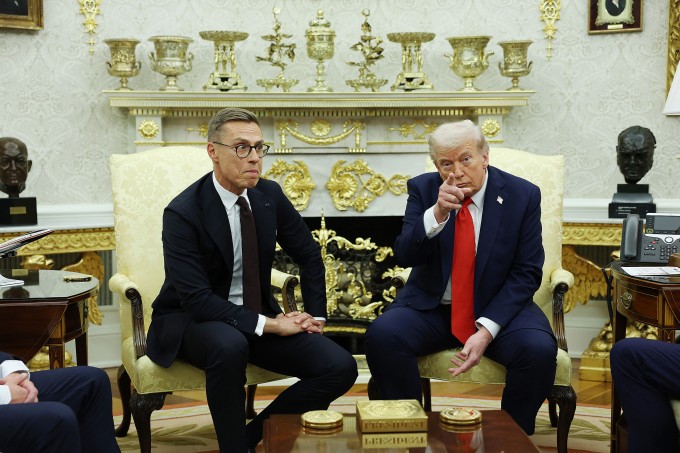
During a meeting with German Chancellor Friedrich Merz at the White House on March 3, President Donald Trump expressed strong dissatisfaction with the Spanish government’s decision. According to Trump, Spain failed to support Washington in its military campaign against Iran and had not met expected defense commitments within NATO.
“We will cut off all trade with Spain. We don’t want to do business with them anymore,” Trump told reporters, describing Spain’s stance as “terrible” and “unfriendly.”
The dispute stems from Spain’s refusal to allow the United States to use the Rota and Morón military bases in southern Spain for operations linked to strikes on Iran. The Spanish government argued that the use of these bases must comply with bilateral agreements and international law, and that military action against Iran without United Nations authorization could violate those principles.
Following Spain’s decision, the United States reportedly redeployed at least 15 military aircraft from the bases, signaling that the disagreement has moved beyond diplomacy into operational military adjustments.
Washington considers economic retaliation
According to officials in Washington, President Trump has asked the U.S. Treasury Department and the Office of the United States Trade Representative to examine possible economic measures against Spain.
One legal instrument being discussed is the International Emergency Economic Powers Act (IEEPA), which allows a U.S. president to impose sanctions or restrict economic transactions after declaring a national emergency.
However, many legal experts argue that applying such measures to a NATO ally like Spain would face serious legal and political challenges. To invoke IEEPA, the U.S. government would need to designate Spain as an “unusual and extraordinary threat” to American national security—an argument that many analysts consider difficult to justify.
In addition, sweeping trade restrictions could conflict with broader trade arrangements between the United States and the European Union, which govern much of the economic exchange between the two sides.
Spain responds firmly
The Spanish government quickly rejected Washington’s threats. Spanish officials emphasized that the use of military bases on Spanish territory must comply with international law and the terms of existing bilateral agreements.
Madrid also stressed that Spain has sufficient economic capacity to mitigate potential damage if the United States were to impose trade restrictions. At the same time, the government reaffirmed its commitment to free trade and continued economic cooperation with global partners.
Spanish authorities also urged Washington to respect international trade rules and existing agreements between the United States and the European Union.
Trade relations between the United States and Spain
While the trade relationship between the two countries is not among the largest in Europe, it remains economically significant.
Recent trade data show that:
- U.S. exports to Spain total about $26.1 billion annually.
- Imports from Spain amount to roughly $21.3 billion.
- The United States maintains a trade surplus of about $4.8 billion with Spain.
Spain is the world’s largest exporter of olive oil and supplies the U.S. market with a variety of industrial products, including automotive components, chemicals, and steel.
Meanwhile, U.S. exports of crude oil and liquefied natural gas (LNG) to Spain have increased significantly in recent years, reflecting Europe’s broader effort to diversify energy sources.
Spain not the only ally under pressure
Spain is not the only country facing pressure from the Trump administration amid the Iran conflict. Several Western allies have also been criticized by Washington for what the White House views as insufficient support for U.S. policy in the Middle East.
British Prime Minister Keir Starmer has also drawn criticism from Trump for adopting a cautious approach toward the military escalation. The U.S. president publicly questioned whether Britain was demonstrating the same level of resolve historically associated with figures such as Winston Churchill.
European leaders, including those in Germany, have emphasized the importance of maintaining unity within the European Union and have expressed concern about unilateral economic pressure being used against EU member states.
Trade as a geopolitical weapon
Trump’s threats toward Spain illustrate a broader trend in global politics: the increasing use of economic tools as instruments of geopolitical pressure.
In recent years, the United States has frequently relied on tariffs, financial sanctions, and trade restrictions to influence the behavior of other nations. However, deploying such tools against NATO allies or close European partners remains unusual and could deepen tensions across the Atlantic.
If such threats were to translate into concrete policy measures, the consequences could extend far beyond bilateral relations between Washington and Madrid. They could also intensify friction between the United States and the European Union at a moment when the international system is already under significant strain due to escalating geopolitical conflicts.
As the confrontation involving Iran continues to unfold, many analysts believe the economic dimension of the crisis—trade flows, energy markets, and supply chains—may become just as strategically important as the military battlefield.

Bài Viết Liên Quan
Kevin Warsh and the New Era of the Fed: How Will Monetary Policy Reshape Global Prices and Precious Metals?
Australia Reviews Anti-Dumping Measures on Galvanized Steel: A Sign of Rising Trade Protection?
Middle East Conflict Boosts China’s Green Industry: Global Expert Perspectives
Industrial Metals Market Volatility: Aluminum, Copper, and Steel Prices Shaped by Geopolitics and Global Demand
Establishing Vietnam’s Carbon Market: A Strategic Step Toward a Green Economy and Global Integration
Global Steel Output Declines in February 2026: A Temporary Adjustment or the Start of a New Cycle?
Bài Viết Cùng thể loại
Kevin Warsh and the New Era of the Fed: How Will Monetary Policy Reshape Global Prices and Precious Metals?
Middle East Conflict Boosts China’s Green Industry: Global Expert Perspectives
Industrial Metals Market Volatility: Aluminum, Copper, and Steel Prices Shaped by Geopolitics and Global Demand
Establishing Vietnam’s Carbon Market: A Strategic Step Toward a Green Economy and Global Integration
Automakers Compete for Aluminum Supply Amid Rising Tensions in the Gulf Region: Global Supply Chains Under Pressure
A New Milestone for Vietnam’s Agriculture: Piloting Pork Trading on the Commodity Exchange