Textile · 13 November, 2026
EU Green Regulations Are Changing How Vietnamese Textile and Garment Businesses Prepare Orders
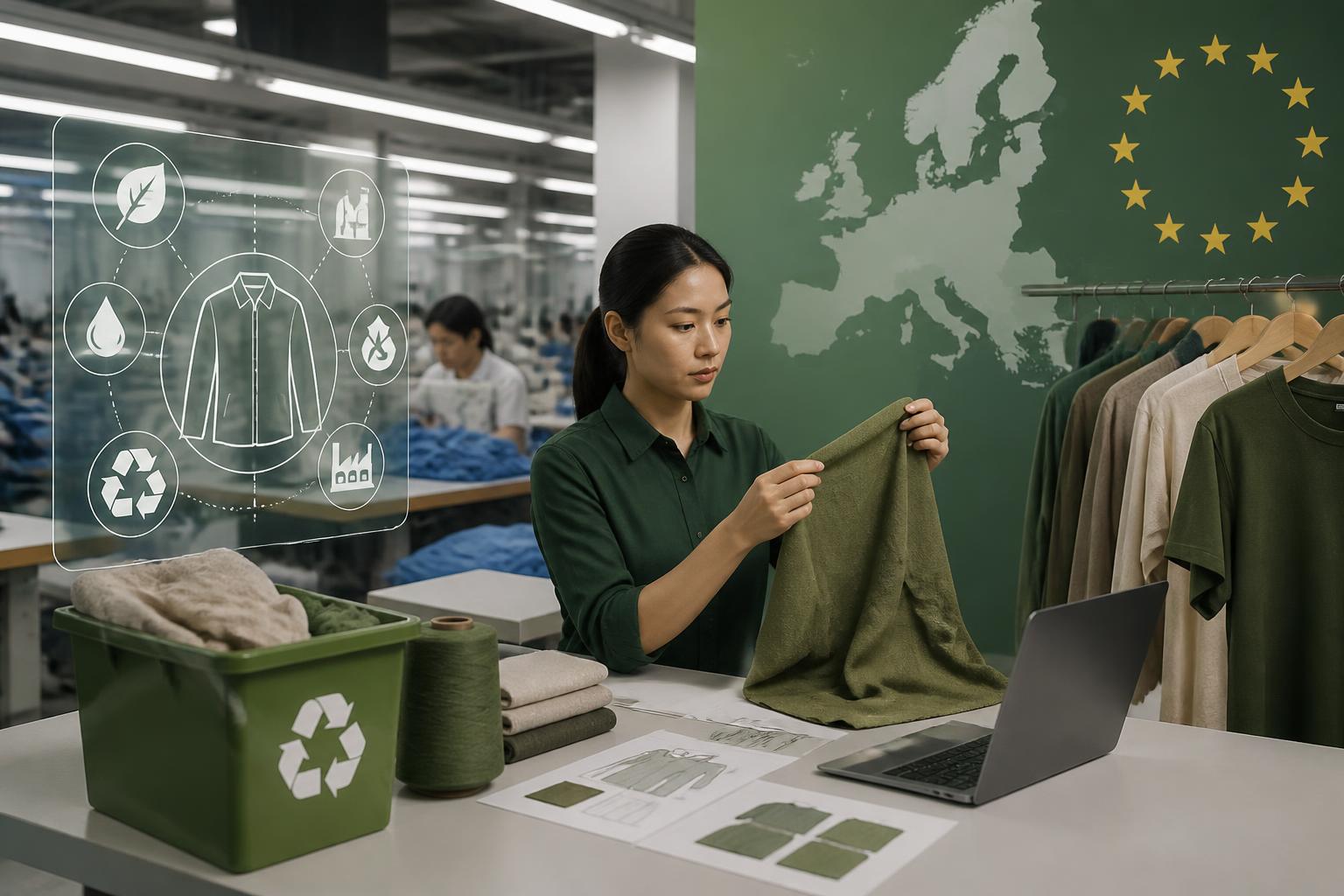
The European textile and garment market is shifting from encouraging sustainable products to requiring businesses to prove that products are designed, manufactured and circulated according to specific environmental criteria. For Vietnamese suppliers, this change is not only about using recycled fibers or reducing energy consumption. It is driving a new management approach in which data on materials, chemicals, durability, repairability and product life cycles becomes part of supply capacity.
At the center of this process is the European Union’s Ecodesign for Sustainable Products Regulation, commonly known as the ESPR. The regulation was issued by the EU in 2024 and expands the scope of regulation from certain energy-related product groups to many types of goods placed on the European market. Textiles have been identified as one of the priority product groups in the roadmap for developing specific requirements.
This does not mean that every Vietnamese garment business must immediately meet the same set of criteria. Detailed requirements will depend on implementing regulations for each product group. However, the policy direction is relatively clear: businesses seeking to maintain orders in the EU will need to prepare earlier to trace data, control materials and substantiate environmental claims.
From Individual Certifications to Data Across the Product Life Cycle
For many years, meeting the requirements of European customers has often been handled through factory audits, material certifications or standards established by individual brands. These tools remain important, but they may not be sufficient to meet the EU’s new regulatory direction. The ESPR lays the foundation for incorporating sustainability information throughout the product life cycle, from design and material selection to use, repair, reuse and post-consumer treatment.
One tool mentioned in this framework is the Digital Product Passport. A product passport is not a single green certification. In essence, it is a data system that enables supply-chain and market participants to access product-related information as required by law. The specific categories of information will be determined through implementing legislation for each product.
For textiles, the data may relate to fiber composition, material origin, quality and durability, repairability, recyclability or environmental impacts to be regulated in the future. Businesses should not view this as a requirement to create an additional paper file for every shipment. The larger issue is that data must be generated from the material-purchasing stage, checked during production and capable of being linked to the finished product.
Weaknesses Often Lie with Lower-Tier Suppliers
Export garment businesses typically manage cutting, sewing, finishing and quality inspection processes fairly closely. However, information about fibers, yarns, dyes, finishing chemicals or blended materials may be held by suppliers several tiers removed from the business. When customers require proof of origin or the proportion of recycled materials, incomplete data at downstream tiers can disrupt the entire verification process.
This is why environmental requirements are shifting from the factory level to the supply-chain level. A factory may reduce electricity use on the production floor, but still face difficulties if it cannot identify the source of its materials or maintain consistent records of product composition. Conversely, businesses with strong data systems will find it easier to respond to the requests of multiple customers instead of handling each separate questionnaire individually.
Why Are Textiles at the Center of the Circular Policy?
Textiles have a long and fragmented value chain. A garment may involve fiber production, spinning, weaving or knitting, dyeing, finishing, cutting and sewing, transportation, retail and the post-use stage. Each process generates different types of data, while product quality and recyclability depend on the connections between those processes.
The EU’s strategy for sustainable and circular textiles emphasizes issues such as durability, repairability, the use of recycled materials, limiting the release of microfibers and controlling the destruction of unsold textiles. These objectives put pressure on both manufacturers and brands because product design has a major influence on long-term usability and on how a product is handled at the end of its life cycle.
For Vietnamese businesses, the first impact may come through customer requirements rather than a direct inspection by EU authorities. Brands and importers often bear greater responsibility for product information when goods enter the market. As a result, they tend to pass traceability, material inventory and impact-assessment requirements down to suppliers.
This explains why many Vietnamese textile and garment businesses have already had to work with questionnaires covering emissions, water, energy, chemicals, fiber origin and labor conditions, even though final legal requirements have not yet been applied uniformly to every product. Businesses may need to begin preparing before mandatory requirements take effect in their commercial contracts.
Three Areas Businesses Need to Prepare
Standardizing Material Data
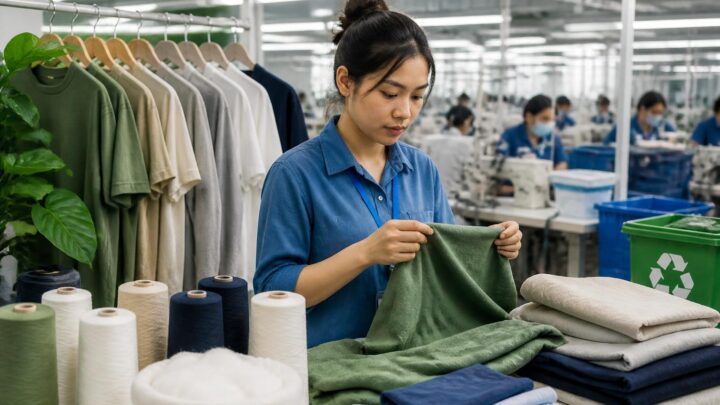
The first step is to map materials for each product line. Businesses need to know what type of yarn a product code uses, its composition, who the supplier is, where the material was produced and which documents can substantiate this information. For recycled materials, businesses need to clearly distinguish the source of the material, the recycling process and the method used to verify the recycled content, rather than simply using the phrase “environmentally friendly” in sales materials.
Standardization should also cover accessories and trims. Zippers, buttons, labels, sewing thread, coatings, adhesives and packaging can affect a product’s ease of disassembly or recyclability. Not every detail will have the same level of importance under every regulation, but if data focuses only on the main fabric, businesses may struggle to respond to requests for an assessment of the entire product.
A suitable solution for many businesses is to begin with several high-volume product groups or products associated with stable EU customers. After identifying data gaps, businesses can expand the system to other product codes. This approach is more practical than digitizing everything at once without determining which data actually needs to be controlled.
Bringing Design and Production into the Same Process
Compliance with green regulations is not determined solely by the environmental department. The design department must consider material composition, durability and repairability; procurement must assess supplier records; production must control chemicals, water and energy; and quality must ensure that published information matches the actual product.
This is a significant change for businesses that primarily manufacture to pre-existing specifications. As brands introduce more detailed requirements for materials and data, factories need to participate earlier in product development. The ability to advise on fabric weight, product construction, color fastness, waste reduction or alternative accessories can become a competitive advantage rather than merely a technical task performed behind the scenes of an order.
Businesses must also be cautious with environmental claims. A product that uses recycled fibers does not automatically mean that the entire product has a lower impact in every respect. Claims should be based on a clearly defined scope, methodology and evidence. Overly broad claims unsupported by data can create compliance and reputational risks when customers conduct checks.
Compliance Costs and Opportunities to Upgrade Market Position
Investing in traceability and data will create initial costs. Businesses may need to upgrade software, train personnel, reassess suppliers, test materials or change record-keeping procedures. For small and medium-sized businesses, this is a significant challenge, especially when margins on contract-manufacturing orders are under pressure from labor costs, logistics and fluctuating demand.
However, these costs do not serve only one market. A standardized material-data system can support quality control, reduce discrepancies between batches, shorten response times to customers and identify supplier risks at an early stage. Managing water, energy and chemical consumption can also help businesses identify sources of waste in production.
The greater challenge is avoiding a situation in which every customer requires a different form. If businesses respond only to individual requests, employees will have to re-enter the same information repeatedly, while the risk of data discrepancies increases. Building a core data set with verification rules and access controls will provide a foundation for meeting multiple standards without a corresponding increase in manual work.
At the industry level, the ability to connect garment businesses, yarn manufacturers, textile dyeing companies and chemical suppliers will determine the success of the transition. If each business optimizes only one stage but the data cannot be shared across the chain, the supply chain will still struggle to fully demonstrate a product’s origin and impact.
What to Monitor in the Next Phase
Vietnamese businesses need to distinguish between three layers of requirements. The first is the legal obligation applicable to a product when it is sold in the EU. The second is the individual requirement of a brand or importer, which may exceed the legal minimum. The third consists of voluntary commitments, certifications and marketing claims. These three layers may be related, but they do not completely replace one another.
In the coming period, the EU’s implementing legislation will be important in determining what data must be provided, which parties are responsible and how inspections will be conducted. Businesses should not wait until all requirements are finalized before beginning preparations, but they should also avoid investing based on interpretations that have not been confirmed. The appropriate approach is to monitor official sources, communicate with customers and build a system that can be adjusted when specific criteria change.
For Vietnamese manufacturers, competitive advantages will no longer lie solely in delivery capacity, cost or craftsmanship. The ability to provide reliable data, control materials and work with customers on sustainable design will increasingly affect the retention of orders. The EU’s green regulations are therefore not only a new trade barrier. They are also a test of the maturity of textile and garment supply-chain management.
Businesses that begin by clearly identifying data, controlling key suppliers and linking environmental requirements with product quality will have a stronger foundation for adapting. As regulations become more detailed, the question will no longer be whether a business can make a green commitment, but whether it can prove that commitment with consistent data throughout the product life cycle.
Related articles
Textile Recycling: New Opportunities and Industry Bottlenecks in Vietnam
The textile and apparel industry is entering a period in which production capacity is no longer the only criterion determining a company’s position. Alongside price, quality and delivery time, international brands are increasingly concerned with the origin of raw materials, the ability to reduce emissions, the use of recycled materials and plans for handling products
Read more
Digital Product Passports: A New Turning Point for the Textile Industry in the Green Supply Chain
The textile industry is entering a phase in which on-time delivery and cost control are no longer the only criteria determining competitiveness. Data on raw material sources, fiber composition, chemicals used, production processes, durability, and recyclability is increasingly regarded as part of a product’s value. Against this backdrop, the digital product passport, commonly known as
Read more
The Circular Economy Is Reshaping the Textile Value Chain
The textile industry is entering a phase in which production capacity and labor costs are no longer the only factors determining competitiveness. How companies use materials, design products, manage chemicals, handle waste, and provide data to customers is increasingly having a direct impact on their ability to retain orders. This trend stems from two main
Read more
The EU’s Sustainable Products Regulation Will Change How Vietnam’s Textile Industry Exports
Vietnam’s textile and apparel industry is preparing for a change that goes beyond tariffs or rules of origin. In the European Union (EU) market, product criteria are increasingly expanding to cover durability, repairability, recycled content, supply chain information, and how products are handled after reaching the end of their life cycle. At the center of
Read more
Vietnam’s Textile and Garment Industry Faces New Requirements for Sustainable Design and the Circular Economy
Vietnam’s textile and garment industry is facing an important shift in the way it approaches the market. Whereas competitiveness was previously assessed mainly through cost, delivery time and the ability to fulfill large orders, criteria related to sustainable design, raw material sources, energy consumption, traceability and the treatment of products after use are playing an
Read more
ESPR and the Data Standardization Challenge for Vietnamese Textile Enterprises
For many years, environmental requirements for exported textiles have focused primarily on chemicals, wastewater, energy and social responsibility. However, the European market is expanding its approach from the production stage to the entire product life cycle. Durability, repairability, recycled material content, reusability and supply chain information are increasingly becoming factors that can influence how a
Read more