Textile · 11 November, 2026
Vietnam’s Textile and Garment Industry Faces New Requirements for Sustainable Design and the Circular Economy
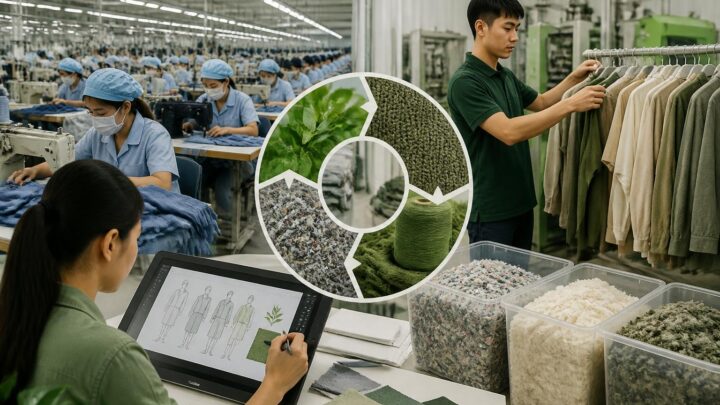
Vietnam’s textile and garment industry is facing an important shift in the way it approaches the market. Whereas competitiveness was previously assessed mainly through cost, delivery time and the ability to fulfill large orders, criteria related to sustainable design, raw material sources, energy consumption, traceability and the treatment of products after use are playing an increasingly important role.
This change is driven by both market forces and policy. International buyers, fashion brands and major retailers are raising their requirements for product environmental data. Meanwhile, the European Union has issued a new legal framework to promote more sustainable products, with textiles among the sectors receiving attention. For Vietnamese businesses, this is not merely a matter of complying with a single regulation; it also affects the entire supply chain, from fiber, textile production, dyeing and garment manufacturing to distribution and product take-back.
New regulations are changing the criteria for competition
On June 13, 2024, the European Union adopted the Ecodesign for Sustainable Products Regulation, commonly known as ESPR. The regulation took effect in July 2024 and provides a basis for the EU to establish specific requirements for different product groups.
ESPR is not a single set of technical standards that immediately applies to every product. It is a legal framework that allows the EU to issue additional regulations for specific product groups, including requirements related to durability, repairability, reusability, recyclability, resource use and the provision of product information. Textiles have been identified as one of the groups with significant environmental impacts and are likely to fall within the priority scope of subsequent initiatives.
What is notable is that this approach shifts the focus from the production stage to the entire product life cycle. A garment is considered not only in terms of where it is made, but also the type of fiber used, the chemicals involved in processing, the amount of water and energy consumed, its durability during use, the ability to separate materials for recycling and the method of treatment after disposal.
For exporters, this may change how customers evaluate suppliers. A garment factory with fast delivery capabilities but no control over raw material sources or no ability to provide reliable data may be disadvantaged compared with a company that has a more transparent management system.
Digital Product Passports and data requirements
An important element of the EU’s policy framework is the Digital Product Passport. This is a mechanism for providing electronic information about products, materials and characteristics related to sustainability. The specific implementation method will depend on the regulations for each product group, but the general direction is that information must be accessible, verifiable and linked to the product life cycle.
In the apparel industry, data may relate to fiber composition, the proportion of recycled materials, the origin of raw materials, care instructions, repairability, and take-back or post-use treatment options. As these requirements become more widespread, businesses will no longer be able to keep records in disconnected formats across different departments. Data on materials, production and quality must be standardized so it can be provided to customers or partners when needed.
This is a significant challenge for Vietnamese businesses that perform contract manufacturing by individual stages. An order may use fabric from one supplier, accessories from multiple sources and be completed at several facilities. Without a standardized process, proving the origin or material composition of a product will take considerable time and may easily lead to discrepancies.
From raw materials to production: pressure is emerging at multiple points
Sustainability requirements do not focus only on garment factories. In the textile and garment industry, many environmental impacts may arise from fiber production, weaving, dyeing and fabric finishing. Therefore, garment manufacturers seeking to meet customer requirements often need to coordinate more closely with raw material suppliers.
At the fiber stage, the question is not only whether cotton, polyester or regenerated cellulose is used, but also the origin and method of verification for each type of material. Recycled materials need appropriate documentation to distinguish them from virgin materials. For blended fibers, the ability to separate the components after use is also an issue that needs to be considered from the design stage.
In weaving and dyeing, factors commonly considered by customers include water, energy and chemical consumption, wastewater treatment and control of restricted substances. These requirements are not entirely new to export-oriented factories, but they are becoming stricter as brands seek to reduce risks throughout the supply chain.
For garment manufacturers, the changes may involve reducing the use of materials that are difficult to recycle, limiting the mixing of too many fiber types, optimizing pattern layouts to reduce fabric waste and designing more durable products. These measures have environmental significance and may also help businesses reduce some material costs if implemented appropriately.
Product design is becoming a decisive stage
In the traditional production model, design departments often prioritize style, color, cost and manufacturability. In a circular economy, decisions made at this stage also affect a product’s ability to be used for a long time, repaired and recycled.
For example, a product with multiple layers of material, many types of accessories or complex blended fibers will be more difficult to process at the end of its life. By contrast, a simpler structure, easily identifiable materials and detachable accessories are more conducive to sorting. Seam durability, the ability to replace a damaged component and care instructions also affect the actual duration of use.
This does not mean that every product must use a single type of fiber or have the same design. The issue is that businesses need to clearly define the environmental objectives of each product line and have data to explain their choices. A general claim that a product is “green” or “environmentally friendly” will be difficult to substitute for specific information about its composition and production process.
What do Vietnamese businesses need to prepare?
For companies that have worked with international brands for many years, many requirements related to chemical management, factory audits and social responsibility have already become part of their daily operations. However, the new regulations require a broader approach, in which product and life-cycle data are connected.
Standardizing data and traceability
The first step is to map the supply chain for each product group. Businesses need to know where materials come from, at which stage they are processed, what certifications or documents exist, and which department stores the information. This is the foundation for responding to customer requests consistently.
Businesses also need to distinguish between data self-declared by suppliers and data verified by third parties. Not all information about recycled content, emissions or the origin of raw materials has the same level of reliability. A sound management system must record the source of the data, the time it was updated and the scope to which it applies.
For small and medium-sized businesses, investing immediately in a complex system can create financial pressure. A more practical approach is to start with key export product groups, standardize the list of materials and establish a consistent storage process. The system can then be expanded according to customer and market requirements.
Technology investment must be linked to operational efficiency
Green transformation is not simply a matter of purchasing new equipment. An energy-efficient production line that does not operate at sufficient capacity or is not properly maintained may not deliver the expected benefits. Businesses need to assess energy consumption, productivity, defect rates, water use and the ability to recover materials at the same time.
In the dyeing industry, controlling chemical quantities, reusing water at appropriate stages and optimizing processes can help reduce consumption. In garment manufacturing, better pattern layouts, fabric inventory management and the collection of waste by material type can reduce the amount of waste. These measures need to be assessed using operational data rather than relying solely on promotional messages.
Businesses also need to consider the capabilities of domestic suppliers. If only a small number of companies can provide recycled materials or meet environmental standards, costs and delivery times may increase. Developing long-term relationships with qualified suppliers will help reduce risks more effectively than looking for alternative sources when an order has already been placed.
The circular economy still lacks collection and recycling links
In textiles and garments, recycling cannot be addressed simply by increasing the proportion of recycled fibers in new products. To create a circular system, the market needs collection, sorting and processing systems that can return materials to production. This is a complex chain of activities requiring the participation of businesses, consumers, logistics providers and regulatory authorities.
Used clothing is often mixed with many other types of waste. Products may contain blended fibers, zippers, buttons, coatings or accessories that make sorting difficult. Therefore, not all textile products can be recycled using the same method. Recyclability depends on material composition, cleanliness, design and the processing technology available.
In Vietnam, the 2020 Law on Environmental Protection and its guiding documents, including Decree No. 08/2022/ND-CP, have laid the foundation for the extended responsibility of producers and importers for certain product and packaging groups. Specific application to each sector needs to be monitored under the relevant regulations. For textiles and garments, businesses should proactively prepare waste management and product information capabilities instead of waiting until legal obligations are expanded or customers impose requirements.
One possible approach is to strengthen the collection of waste materials directly at factories. Clean waste that is sorted by composition and free of contaminants has a higher use value. However, this is still easier to control than post-consumer clothing. Processing used products requires a broader cooperation model involving brands, retailers, collection companies and recycling facilities.
Opportunities and risks for Vietnam’s textile and garment industry
The new requirements will certainly increase compliance costs in the short term. Businesses will need to allocate resources for testing, certification, management software, personnel training and factory improvements. Companies that depend on short-term orders, operate with low profit margins or lack the ability to control suppliers will face greater pressure.
However, this is also an opportunity for Vietnam’s textile and garment industry to move up the supply chain. When customers need suppliers with data management capabilities, stable quality control and the ability to meet environmental goals, businesses can compete through reliability rather than labor costs alone.
The ability to provide products with sustainable designs can also help businesses participate more deeply in product development. If they only receive materials and designs from buyers, businesses will find it difficult to create differentiated value. By contrast, suppliers that can advise on fiber selection, fabric structure, finishing processes and waste-reduction methods will have a stronger position in their relationships with brands.
This prospect will not materialize automatically. To take advantage of the opportunity, businesses need to avoid using unsupported environmental claims. Inaccurate information about recycled content or the origin of raw materials can create commercial, reputational and legal risks. Commitments need to be accompanied by clear measurement methods, documentation and a defined scope of application.
Issues to monitor in the coming period
First are the EU’s specific regulations for textile products under ESPR. The general legal framework is only the foundation; detailed requirements, implementation timelines and methods of verification will determine the direct impact on each product group.
Second is how international brands turn environmental requirements into purchasing conditions. Many businesses may have to meet customer criteria before the legal regulations are fully implemented. Therefore, monitoring legal documents alone is not enough; businesses must also keep up with the criteria of partners and target markets.
Third is the development of domestic recycling infrastructure. Without suitable processing facilities, businesses will find it difficult to build a circular supply chain at scale, even after improving product design and sorting. This is an area that requires coordination among public policy, private investment and technical standards.
Fourth is the quality of human resources. A circular economy requires coordination among design, engineering, procurement, production, quality, information technology and business functions. Companies cannot assign all of these responsibilities to a single environmental department. Decisions about materials and design must be connected to production capabilities and customer requirements.
For Vietnam’s textile and garment industry, the transition to a sustainable model will be a process lasting many years, not a short-term campaign. Businesses that begin by taking inventory of their data, controlling materials, reducing waste and designing products with their life cycle in mind will have a stronger foundation as market requirements become more specific. In a context where international competition increasingly depends on transparency, the ability to demonstrate how a product is made may be no less important than the ability to manufacture the product itself.
Related articles
The EU’s Sustainable Products Regulation Will Change How Vietnam’s Textile Industry Exports
Vietnam’s textile and apparel industry is preparing for a change that goes beyond tariffs or rules of origin. In the European Union (EU) market, product criteria are increasingly expanding to cover durability, repairability, recycled content, supply chain information, and how products are handled after reaching the end of their life cycle. At the center of
Read more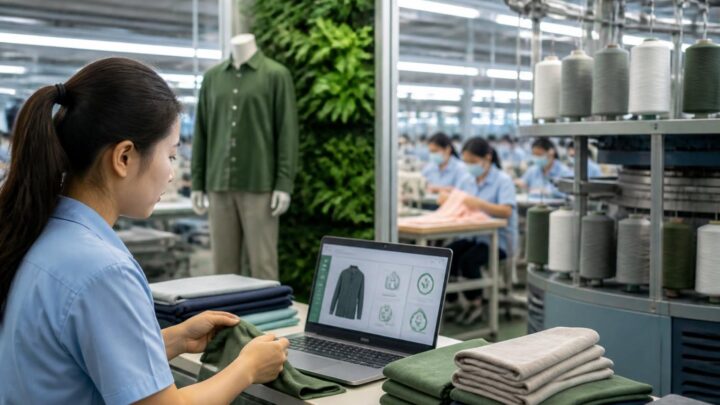
ESPR and the Data Standardization Challenge for Vietnamese Textile Enterprises
For many years, environmental requirements for exported textiles have focused primarily on chemicals, wastewater, energy and social responsibility. However, the European market is expanding its approach from the production stage to the entire product life cycle. Durability, repairability, recycled material content, reusability and supply chain information are increasingly becoming factors that can influence how a
Read more
EU Green Regulations Are Changing How Textile Businesses Prepare Orders
The textile industry is entering a period in which production capacity, cost and delivery time are no longer the only criteria determining competitiveness. For businesses exporting to Europe, information about materials, production processes, product durability and post-use treatment options is increasingly shaping relationships with customers. This change is being driven by the European Union’s policy
Read more
Textile Recycling: What Vietnamese Businesses Need to Prepare for a Circular Supply Chain
For many years, textile recycling in Vietnam was mainly viewed as a waste treatment activity or a corporate social responsibility initiative. That approach is changing. As international brands require suppliers to better control raw materials, chemicals, water, energy and product end-of-life, the ability to participate in a circular supply chain is gradually becoming a competitive
Read more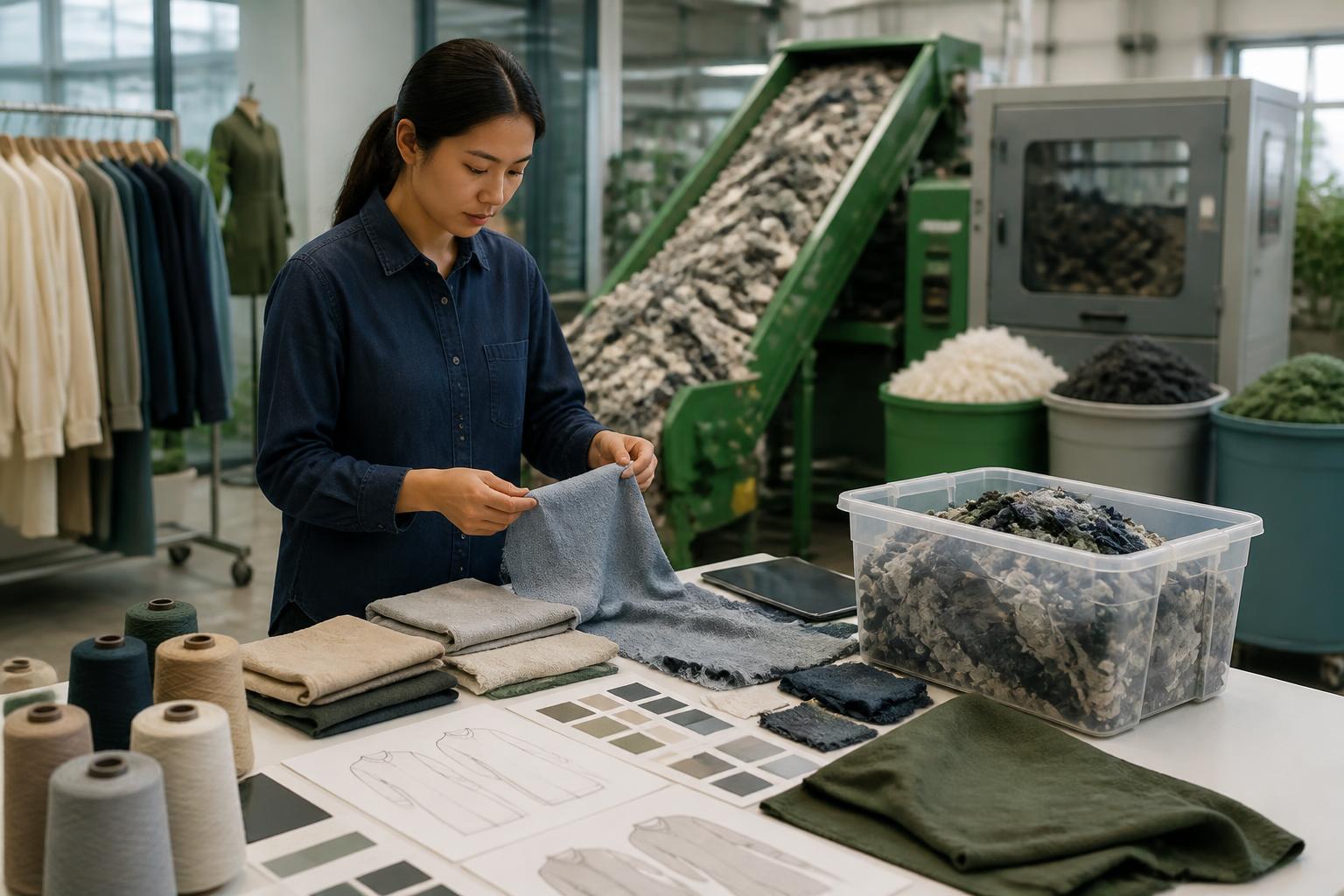
Textile Recycling: From Waste Management to the Need to Redesign the Value Chain
For many years, recycling was often viewed as the final stage in the life cycle of a garment: clothing that was no longer being used would be collected, sorted, and then converted into raw materials for another product. However, this approach is gradually revealing its limitations. If a product is made from a blend of
Read more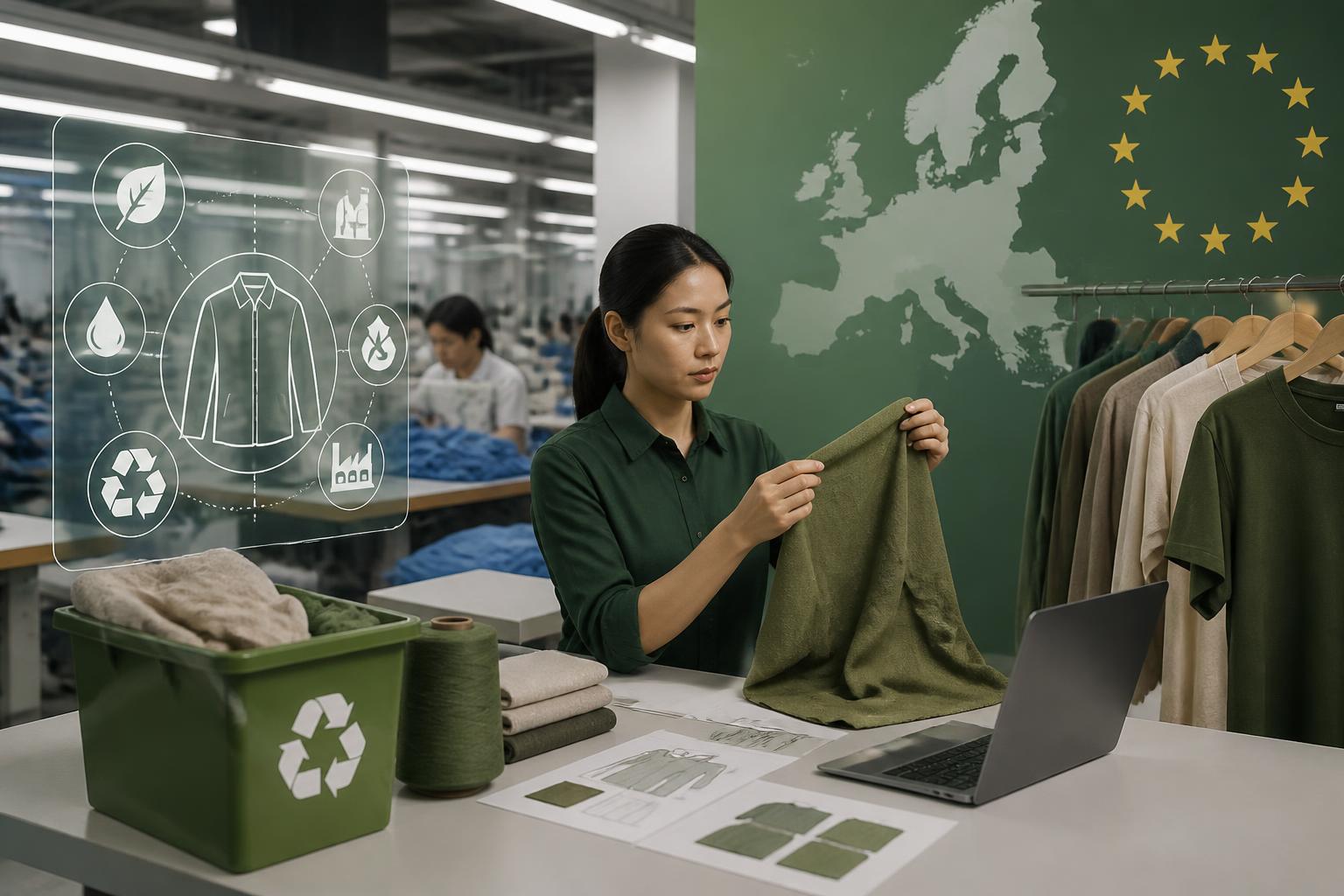
EU Green Regulations Put Vietnam’s Textile and Garment Supply Chain Under New Data and Design Requirements
The European textile and garment market is shifting from an approach focused on production to one that manages the entire product life cycle. A garment is no longer assessed only by its price, seam quality, or delivery time. Design, material composition, repairability, durability, supply chain information, and end-of-life treatment are increasingly becoming part of market
Read more