
News
The Middle East on the Brink: Three Conflict Scenarios and the Shockwaves Facing the Global Economy
Jan
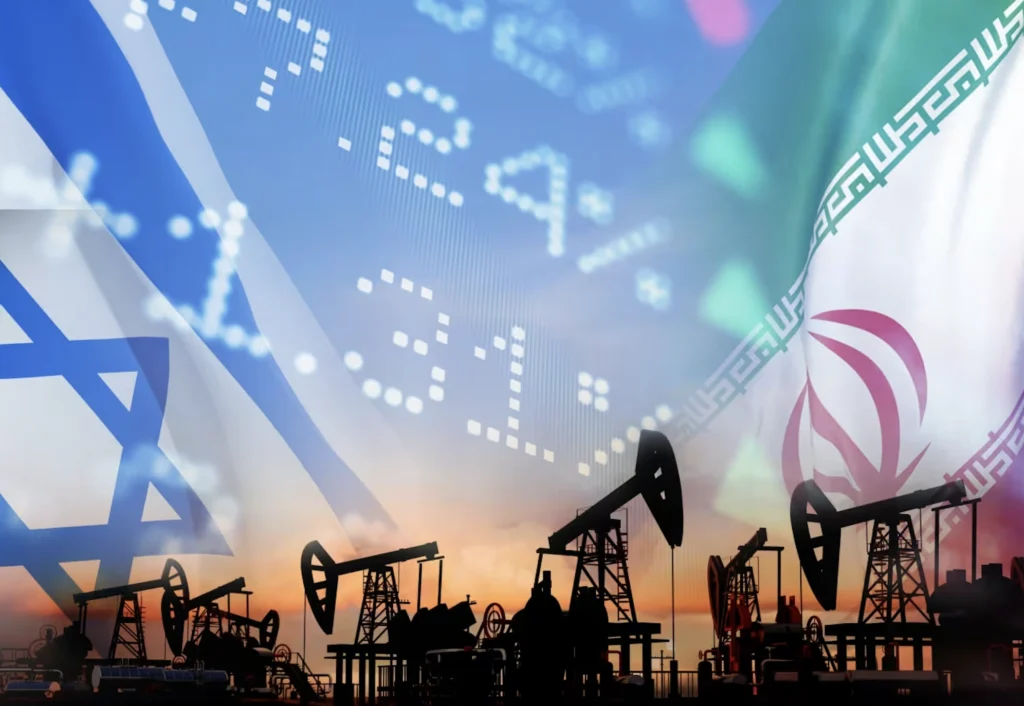
The Middle East is once again returning to the center of the global geopolitical chessboard. Recent military movements by the United States, increasingly assertive operations by Israel across the region, and signs of internal instability within Iran—most notably Tehran’s decision to close its airspace under a contingency scenario reminiscent of last year’s crisis—have raised a pressing question among international observers: how close is the world to another major escalation?
History shows that the Middle East has never been merely a theater of bombs and missiles. Every surge in tension in this region has tended to ripple rapidly through the global economy via energy markets, financial systems, and investor sentiment. Oil prices, the U.S. dollar, and global risk appetite consistently act as the most sensitive barometers, reflecting not only unfolding events but also the fear of what may come next.
Looking back, three distinct conflict scenarios emerge, each carrying vastly different economic consequences. At the heart of all three lies a single decisive factor: Iran.
The Middle East as a Global Economic Fault Line
It is no coincidence that whenever the Middle East heats up, global financial markets react almost instantly. The region holds roughly one-third of the world’s proven oil reserves and controls critical energy transportation routes, most notably the Strait of Hormuz, through which more than 20 percent of global traded oil passes each day.
Over the past several decades, every major oil shock has been linked to Middle Eastern conflict. From the oil crises of the 1970s to the 1991 Gulf War and the U.S.–Iran standoff between 2018 and 2020, markets have learned one fundamental lesson: not all wars are created equal. The degree of Iran’s involvement determines whether the world experiences a temporary tremor or a systemic economic crisis.
Scenario One: A Contained Conflict – Iran Remains Behind the Scenes
In the first scenario, hostilities are limited to the United States and Israel confronting Iran-aligned forces across the region. Tehran continues its familiar strategy of exerting influence through proxy groups in Lebanon, Syria, Iraq, and Yemen, while avoiding direct military confrontation with Washington or Tel Aviv.
History suggests this is the most common pattern of conflict in the Middle East. Despite rising tensions, markets typically conclude that risks remain manageable.
From an economic standpoint, the initial response is almost always the same. Oil prices jump sharply in the early days as fears of supply disruptions take hold. Yet as long as oil continues to flow through the Strait of Hormuz and no major energy infrastructure is damaged, those gains tend to fade.
In such conflicts, oil rises not because of an actual shortage, but because fear is being priced in. Once that fear recedes, prices often correct accordingly.
The U.S. dollar typically strengthens modestly in this scenario due to its safe-haven status, though the move is rarely large enough to destabilize global financial conditions. Inflationary pressure from higher energy prices remains limited and temporary, insufficient to force central banks into major policy shifts.
Overall, this is a case of noise without collapse. The global economy absorbs the psychological shock, but avoids slipping into a new crisis cycle. After a period of volatility, markets usually refocus on fundamentals such as interest rates, growth prospects, and monetary policy.
Scenario Two: A Short, Direct Confrontation – Iran Crosses the Red Line
The second scenario begins when Iran moves from indirect involvement to direct military engagement, even if only briefly. This is the moment that truly unsettles energy markets.
Unlike the first scenario, Iran’s direct participation immediately raises fears of real supply disruptions. It does not require a prolonged war; even limited strikes on energy infrastructure, oil terminals, or key shipping routes can send prices surging.
History shows that in such cases, oil prices tend to react in shock-like fashion, rising rapidly over a short period. If the conflict is contained and ends within weeks, prices often retreat from their peaks. However, the post-crisis price floor typically settles higher than before, as markets emerge more sensitive to geopolitical risk.
The U.S. dollar usually strengthens more decisively than in scenario one, driven by a flight from risk assets and a rush into perceived safe havens. Yet this strength carries a paradox. If oil prices spike too sharply, imported inflation can return to the United States and Europe, complicating monetary policy and undermining growth.
At the macroeconomic level, central banks face a dilemma. Tightening policy to contain inflation risks pushing economies toward recession, while easing to support growth risks allowing inflation to spiral.
This is a dangerous scenario, but not without an exit. If hostilities remain brief, the global economy may avoid a full-scale crisis, though financial instability is likely to linger.
Scenario Three: All-Out War – The Middle East Becomes a Global Epicenter of Crisis
The third scenario, and by far the most severe, unfolds when conflict escalates into a full-scale war between Iran and its allied forces on one side, and the United States, its allies, and Israel on the other. At this point, the Middle East ceases to be a regional flashpoint and becomes the epicenter of a global geopolitical crisis.
In such a scenario, the Strait of Hormuz faces the real risk of closure or severe disruption. Oil prices would not merely rise—they could spiral beyond the bounds of conventional forecasting models, delivering a historic shock.
Oil would no longer function simply as a commodity, but as a geopolitical weapon. Energy-importing nations would face soaring costs, while global supply chains would be strangled by surging transportation and logistics expenses.
The U.S. dollar would likely surge initially, benefiting from its role as the ultimate financial safe haven. Over time, however, prolonged war, massive military spending, high inflation, and a global downturn could erode confidence in the dollar—particularly if the United States bears the bulk of the conflict’s costs.
Economically, the world would face the return of stagflation—high inflation combined with weak growth—reminiscent of the 1970s oil shocks. Global equity markets would plunge, capital would flee emerging economies, and international trade would contract sharply.
This would not be a short-lived shock, but a transformative event capable of reshaping the global economic and financial order for years to come.
Iran as the Key to Every Scenario
From past to present, one conclusion stands out clearly: Iran is the key determinant of every Middle Eastern economic scenario. When Iran stays on the sidelines, markets shake but remain intact. When Iran intervenes briefly, the world absorbs a major shock but retains a degree of control. And when Iran engages fully, the crisis transcends the Middle East, becoming a defining test for the global economy.
In the current environment, market reactions—particularly movements in oil prices and the U.S. dollar—will serve as early indicators of which path the world is sliding toward. History has repeatedly shown that financial markets often sense the smell of war long before the first shots are fired.

Bài Viết Liên Quan
Kevin Warsh and the New Era of the Fed: How Will Monetary Policy Reshape Global Prices and Precious Metals?
Australia Reviews Anti-Dumping Measures on Galvanized Steel: A Sign of Rising Trade Protection?
Middle East Conflict Boosts China’s Green Industry: Global Expert Perspectives
Industrial Metals Market Volatility: Aluminum, Copper, and Steel Prices Shaped by Geopolitics and Global Demand
Establishing Vietnam’s Carbon Market: A Strategic Step Toward a Green Economy and Global Integration
Global Steel Output Declines in February 2026: A Temporary Adjustment or the Start of a New Cycle?
Bài Viết Cùng thể loại
Kevin Warsh and the New Era of the Fed: How Will Monetary Policy Reshape Global Prices and Precious Metals?
Middle East Conflict Boosts China’s Green Industry: Global Expert Perspectives
Industrial Metals Market Volatility: Aluminum, Copper, and Steel Prices Shaped by Geopolitics and Global Demand
Establishing Vietnam’s Carbon Market: A Strategic Step Toward a Green Economy and Global Integration
Automakers Compete for Aluminum Supply Amid Rising Tensions in the Gulf Region: Global Supply Chains Under Pressure
A New Milestone for Vietnam’s Agriculture: Piloting Pork Trading on the Commodity Exchange