
Metal, News
Australia Reviews Anti-Dumping Measures on Galvanized Steel: A Sign of Rising Trade Protection?
Apr
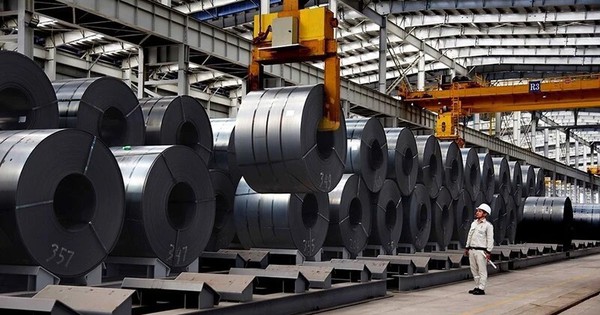
The Australian Anti-Dumping Commission is currently conducting a preliminary assessment to determine whether to initiate an anti-dumping investigation into galvanized steel imports from Vietnam and South Korea. The products under review fall under several HS codes and are mainly used in construction and industrial applications. A final decision is expected by April 20, 2026.
Although this is only a preliminary review, it has already introduced a degree of caution into the market. Some Vietnamese exporters are slowing shipment schedules or holding back on new contracts while waiting for clearer signals. At the same time, companies are preparing documentation, cost data, and response strategies in case a formal investigation is launched.
In reality, Vietnam is not the only country affected by such measures from Australia. Over the years, Australia has imposed anti-dumping duties on steel imports from multiple countries, particularly China, South Korea, and India. This reflects a broader pattern in which Australia actively uses trade remedies to manage competitive pressures in key domestic industries.
From a legal standpoint, anti-dumping measures are permitted under the rules of the World Trade Organization, provided that authorities can demonstrate imported goods are sold below normal value and cause material injury to domestic producers. Therefore, Australia’s current review process is not unusual in the context of international trade.
However, in an increasingly competitive global environment, the line between legitimate trade defense and protectionism can become blurred. In sectors like steel, where pressure from low-cost imports is significant, such investigations carry not only legal implications but also strong market signals. Even without a final ruling, they can disrupt trade flows and influence decision-making on both the supply and demand sides.
For Vietnamese exporters, the main risk lies in the potential loss of competitiveness if anti-dumping duties are eventually imposed. At the same time, this situation also serves as a test of resilience. Companies with strong governance, transparent cost structures, and well-controlled supply chains are more likely to adapt and maintain their position in demanding markets.
This development also reflects a broader global trend, as more countries increasingly turn to trade remedies to protect domestic industries. In that context, diversifying export markets, improving production standards, and strengthening legal preparedness are no longer optional, but essential for long-term sustainability in international trade.

Bài Viết Liên Quan
Kevin Warsh and the New Era of the Fed: How Will Monetary Policy Reshape Global Prices and Precious Metals?
Global Steel Industry Reshaping: Short-Term Decline, Deepening Divergence, and the Rise of New Growth Centers
Middle East Conflict Boosts China’s Green Industry: Global Expert Perspectives
Gold After the $5,500 Peak: Why Markets Are Warning of a Possible Correction to $3,800
Gold Price Outlook: When Global Instability Becomes the Catalyst, the $10,000 Mark Is No Longer Far-Fetched
Industrial Metals Market Volatility: Aluminum, Copper, and Steel Prices Shaped by Geopolitics and Global Demand
Bài Viết Cùng thể loại
Kevin Warsh and the New Era of the Fed: How Will Monetary Policy Reshape Global Prices and Precious Metals?
Global Steel Industry Reshaping: Short-Term Decline, Deepening Divergence, and the Rise of New Growth Centers
Gold After the $5,500 Peak: Why Markets Are Warning of a Possible Correction to $3,800
Gold Price Outlook: When Global Instability Becomes the Catalyst, the $10,000 Mark Is No Longer Far-Fetched
Industrial Metals Market Volatility: Aluminum, Copper, and Steel Prices Shaped by Geopolitics and Global Demand
Global Steel Output Declines in February 2026: A Temporary Adjustment or the Start of a New Cycle?